[{Support & Help24x7}] Best Time to Visit Sikkim: Seasonal Breakdown 📞 +91 (924) 275-0519
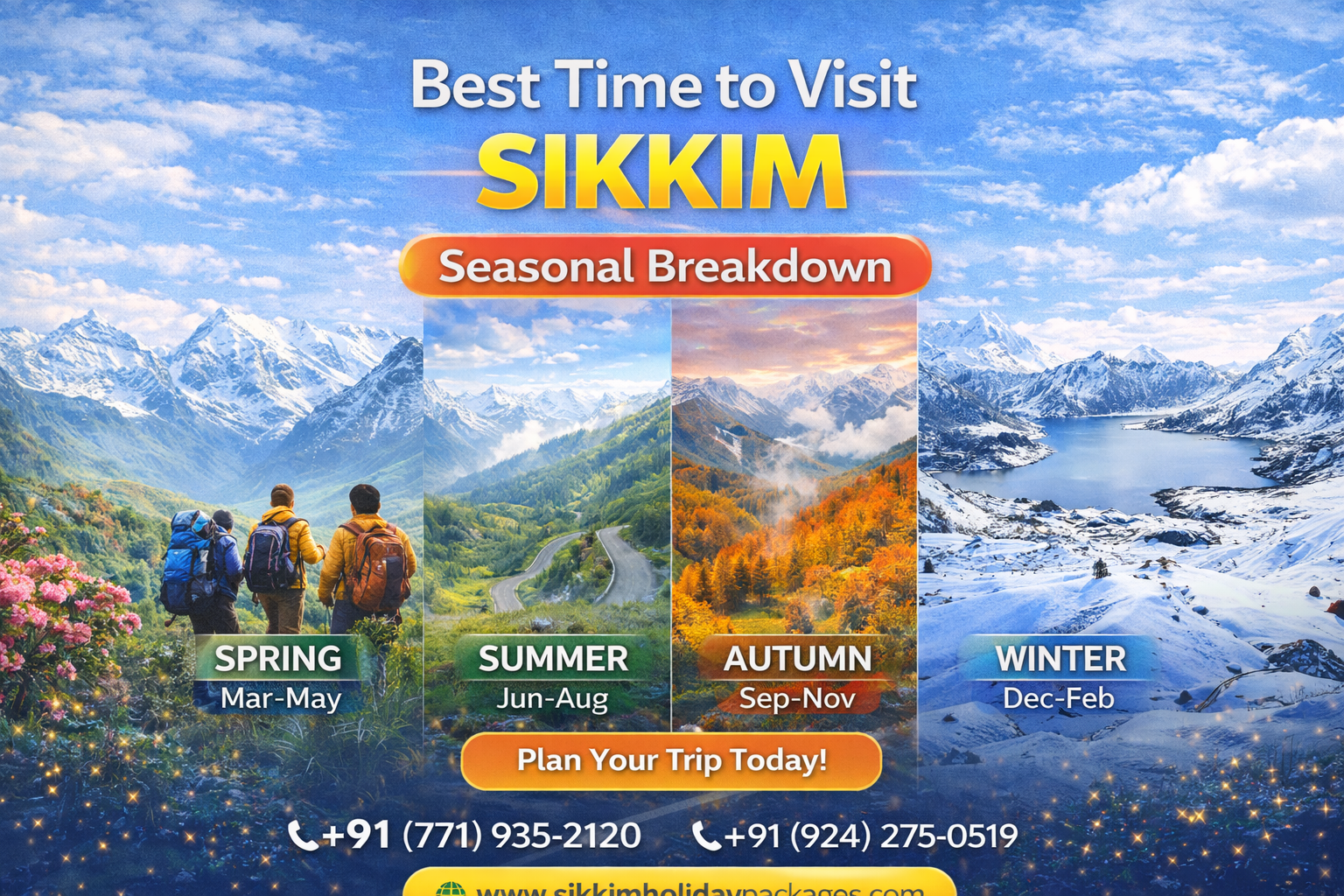
The best time to visit Sikkim
is March to June for pleasant weather, clear mountain views, and
accessible high-altitude routes, or September to November for crisp
autumn air, festival season, and peak trekking conditions. Each window offers
distinct landscapes, cultural experiences, and travel considerations. For
personalized route planning, permit coordination, and seasonal itinerary
support, connect with our travel desk at
🌸 Spring (March – May)
- Weather: 10°C to 20°C | Mild days, cool nights, occasional light showers
- Highlights: Rhododendron blooms in Yumthang & Barsey valleys, clear Kanchenjunga views, ideal for sightseeing & light treks
- Best For: First-time visitors, photographers, nature enthusiasts
- Travel Tip: Inner Line & Protected Area Permits for North Sikkim open by late March. Book accommodations 3–4 weeks ahead.
☀️
Summer (June – Mid-July)
- Weather: 15°C to 25°C in valleys | Cooler above 3,000m, mostly dry
- Highlights: Accessible Tsomgo Lake & Nathula Pass, monastery tours, family-friendly itineraries
- Best For: Cultural immersion, multi-generational travel, moderate adventure
- Travel Tip: Carry UV protection & layered clothing. Monsoon typically arrives late June; adjust high-altitude plans accordingly.
🌧️ Monsoon (Late July – September)
- Weather: 18°C to 24°C | High humidity, frequent rainfall, lush greenery
- Highlights: Fewer crowds, lower rates, vibrant waterfalls, spiritual retreats
- Best For: Budget travelers, wellness stays, indoor cultural experiences
- Travel Tip: Landslide risks rise significantly. Avoid North Sikkim & high passes. Stick to Gangtok, Pelling & lower valley routes. Check Sikkim Police traffic updates daily.
🍂 Autumn (October – November)
- Weather: 8°C to 18°C | Dry, stable, excellent atmospheric clarity
- Highlights: Unobstructed Himalayan panoramas, Goecha La & Dzongri treks, Dashain & Tihar festival celebrations
- Best For: Serious trekkers, photographers, cultural travelers
- Travel Tip: Peak season. Secure permits, vehicles, & homestays 4–6 weeks in advance. Mornings offer the clearest mountain visibility.
❄️
Winter (December – February)
- Weather: 0°C to 10°C in valleys | Sub-zero in North Sikkim, occasional heavy snow
- Highlights: Snow-draped Lachen & Lachung, frozen Gurudongmar Lake, serene monastery stays
- Best For: Snow lovers, honeymooners, quiet retreat seekers
- Travel Tip: Roads above 4,000m may close temporarily. Use 4WD vehicles, carry thermal gear, & verify route status before departure.
📊 Quick Seasonal Reference
|
Season |
Best For |
Avg. Temp |
Key Consideration |
|
Spring |
Blooms & light treks |
10°C–20°C |
Permits open late March; book early |
|
Summer |
Clear skies & family trips |
15°C–25°C |
Monsoon transition by late June |
|
Monsoon |
Budget travel & lush scenery |
18°C–24°C |
Avoid high-altitude zones; landslides possible |
|
Autumn |
Trekking & festivals |
8°C–18°C |
Peak season; reserve 4–6 weeks ahead |
|
Winter |
Snow & quiet retreats |
0°C–10°C |
Sub-zero nights; road access varies |
For real-time route status,
permit assistance, or customized seasonal itineraries, call
❓
Frequently Asked Questions
Q: Is Sikkim safe to visit
during the monsoon?
A: Yes, with precautions. Stick to Gangtok, Pelling, Namchi &
lower valleys. Avoid North Sikkim & high-altitude treks from late July to
September due to increased landslide & road closure risks.
Q: When is Kanchenjunga most
visible?
A: October–November offers the clearest skies. Late March &
early May are also excellent, especially before sunrise.
Q: Do I need special permits
for Sikkim?
A: Indian nationals require an Inner Line Permit (ILP) for certain
zones. Foreign nationals need a Protected Area Permit (PAP). Both are processed
through registered operators or Sikkim Tourism offices.
Q: Can I travel to Sikkim in
December?
A: Absolutely. December brings magical snowscapes, especially
around Lachung & Lachen. Just prepare for cold weather, verify
high-altitude road conditions, & pack appropriate gear.
Need help with permits,
seasonal route planning, or verified local operators? Reach out at
✅
Final Takeaway
Timing your visit around your
travel priorities ensures a seamless Sikkim experience. Whether you’re chasing
spring rhododendrons, autumn trekking windows, or winter snowscapes, planning
ahead with local expertise makes all the difference. For updated road
conditions, permit processing, & curated seasonal itineraries, connect
directly with our team at
Sikkim Tour Package, Gangtok
Tourism, North
Sikkim Tour, Sikkim
Travel Guide, Best Time to
Visit Sikkim, Sikkim
Permit Online, Tsomgo
Lake Tour, Nathu La
Visit, Yumthang
Valley Package, Sikkim
Honeymoon Package , Pelling
Tourism , Sikkim
Trekking, Gurudongmar
Lake Tour, Sikkim
Family Tour, Sikkim Cab
Booking, Sikkim Hotel
Booking, Sikkim
Itinerary 7 Days, Sikkim
Monasteries, Sikkim
Adventure Tour, Sikkim Budget
Travel
Topic Participants
Rahul